
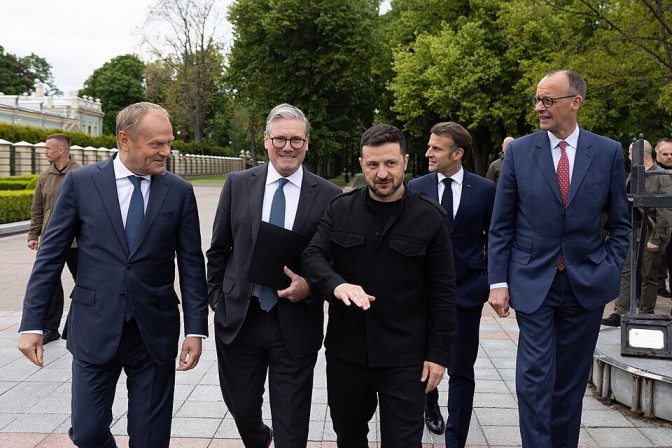
British Prime Minister Keir Starmer’s recent resignation has sparked a wave of reactions across Europe, notably leading to the postponement of the anticipated EU-UK summit. European leaders have lauded Starmer’s tenure, emphasizing his significant contributions to bolstering relations between the United Kingdom and the European Union, particularly in the realms of security and support for Ukraine.
European Commission President Ursula von der Leyen expressed gratitude for Starmer’s efforts in enhancing European and Ukrainian security, highlighting how his leadership fostered improved cooperation. António Costa, the President of the European Council, voiced optimism that Starmer’s successor would continue on the path of rebuilding and strengthening ties with the UK.
The planned EU-UK summit, initially set for July 22, was poised to address key issues such as trade agreements, youth mobility, and climate policy cooperation. Despite the shift in Britain’s political landscape, officials remain committed to advancing relations between the EU and the UK, underscoring the importance of continuity in diplomatic efforts.
Ukrainian President Volodymyr Zelenskyy also commended Starmer for his unwavering support for Ukraine, acknowledging that their collaborative efforts have reinforced European security. Germany echoed these sentiments, recognizing Starmer as a dependable ally, especially concerning foreign policy and matters related to Ukraine.
Starmer’s departure has garnered attention from global leaders as well. Former U.S. President Donald Trump extended his well wishes but critiqued Starmer’s policies on immigration, energy, and certain international decisions. Meanwhile, leaders from Australia and Norway have expressed their support, acknowledging the complexities inherent in political leadership.